Erosion Control Services in Delaware, OH
Erosion Control Kings provides erosion control, slope stabilization, and washout repair services in the Delaware, OH area for both residential and commercial properties, from a bare hillside behind a house to graded lots and creek banks. Contact us now for a free estimate.
How Much Does Erosion Control Cost in Delaware, OH?
Erosion control in Delaware, OH costs anywhere from $970 to $3,400 on average to stabilize one residential slope or bare area. The price depends on the size and steepness of the ground, the soil, how much water runs across it, the method used, any regrading or drainage work, and how easily equipment can reach the spot.
Do You Handle Erosion Control for Homes and Commercial Properties?
Yes, we work on houses, rental properties, HOA common areas, new building lots, and commercial sites. Let us know the property type and roughly how big the eroding area is.
Do You Service My Area?
Yes, we cover the Delaware, OH area. Send us the property address and we'll confirm.
How Soon Can You Come Out to Look at the Erosion?
We can usually look at the site within a few days. If soil is actively washing toward a house, road, or neighbor's yard, tell us and we'll try to get there sooner.
Can You Put Something Down Before a Big Storm Hits?
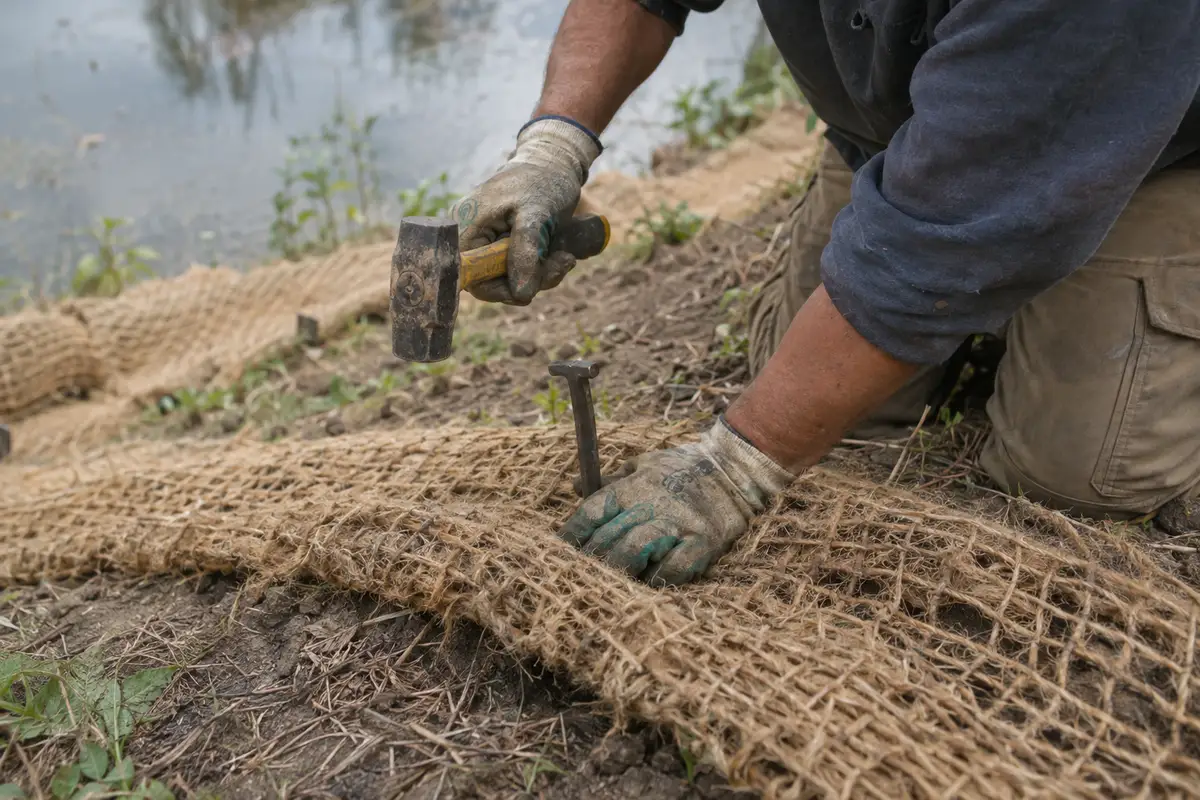
Yes, we can install temporary protection such as straw wattles, plastic sheeting, sandbags, or a stapled blanket on short notice. Permanent work like seeding and planting comes after the storm.
What Information Do You Need to Quote Erosion Control?
We need the address, photos of the eroding area, its rough length and width, and how steep it is. Tell us where the water comes from, such as a downspout, a neighbor's yard, or the street.
Will I Need to Be Home While You Work?
No, as long as we can reach the area and you've approved the plan.
Do I Need a Permit for Erosion Control Work?
No, not for most small yard jobs like seeding, blankets, and planting. Grading, retaining walls, and work near a creek, lake, or wetland often need approval. Your local permit office decides, and we can tell you what's usually required.
Can I Get a Price Before the Work Begins?
Yes, we confirm the price before starting. If we find buried debris, a broken drain pipe, or a bigger slide once we start, we talk to you before doing extra work.
Does Homeowners Insurance Cover Erosion Damage?
No, usually not. Many policies exclude earth movement and gradual erosion, so ask your agent what yours covers.
How Long Does an Erosion Control Job Take?
Residential jobs usually take one to three days on site. Larger slopes with regrading, drainage, or a wall can take a week or more.
Can You Stop Erosion on a Steep Hillside?
Yes, we stabilize steep slopes with blankets rated for the grade, wattles across the slope, and deep-rooted plants. Very steep or slipping ground may need terraces, a wall, or a geotechnical engineer, so send us photos taken from the side.
How Steep Is Too Steep for Grass?
About 3:1, meaning 3 feet across for every foot of drop, is the steepest slope you can safely mow. Up to about 2:1 we use shrubs and groundcovers instead, and steeper ground needs structural help.
Can You Repair a Small Slope That Already Slid?
Yes, for shallow slides of surface soil. We reshape the area, fix the water causing it, and cover it. A deep slide, a cracked wall, or ground moving near the house needs a geotechnical engineer first.
Can You Fix a Washout or Gully in My Yard?
Yes, we fill and compact the gully, then slow the water that cut it with a swale, rock lining, or check dams. Filling it without fixing the water just brings the gully back.
Can You Line a Drainage Ditch or Swale That Keeps Eroding?
Yes, we line channels with rock, a permanent turf reinforcement mat, or a seeded blanket, depending on how fast the water runs. Plain seed or straw usually washes out of a channel.
Can You Stop Erosion Caused by My Downspouts?
Yes, we extend the downspouts past bare soil and put rock or a splash pad where the water comes out. Where the yard can't take the water, we can run it through buried pipe to a safer spot.
Can You Stop Soil From Washing Onto My Driveway or Sidewalk?
Yes, we find where the runoff starts, cover the bare soil, and add a border, swale, or wattles to catch what moves. Tell us how often it happens and after how much rain.
Can You Fix Soil Washing Away From My Foundation?
Yes, we rebuild the soil against the foundation so it slopes away from the house, then cover it with mulch, plants, or rock. If the footing is exposed or cracked, a structural contractor should look at it too.
Can You Control Erosion Along a Creek or Stream Bank?
Yes, in most cases, using live plantings, coir logs, and rock where the current hits hardest. Work at or below the waterline often needs state or federal approval first, so we start by checking what applies.
Can You Stop Shoreline Erosion on a Lake or Pond?
Yes, we use native plantings, coir logs, and rock at the waterline. Work at the shore often needs approval, so tell us who manages the water and whether you have a seawall now.
Can You Stabilize My Yard After Grading or a New Build?
Yes, bare graded soil should be seeded and covered as soon as possible. Tell us when the grading was finished and whether the final grade is set.
Can You Install Erosion Control on a Construction Site?
Yes, we install silt fence, inlet protection, construction entrances, and temporary seeding for builders. Sites disturbing 1 acre or more usually need a stormwater permit and plan, so send us the plan if you have one.
Can You Stabilize a Slope After a Wildfire?
Yes, we use seed, mulch, wattles, and blankets to hold burned soil before the rainy season. Burn areas can produce mudflows that no yard work will stop, so follow your local agency's warnings too.
What Should I Do About the Erosion Until You Arrive?
Cover the worst bare spots with straw or plastic sheeting held down with rocks, and point downspouts away from the slope. Stay off ground that is cracking or slumping and tell us about it when you call.
Should I Cut Down Trees on My Slope?
No, in most cases. The roots are holding that soil, and clearing trees on a slope often starts new erosion. Talk to us before removing any.
When Is the Best Time to Seed a Slope?
Early fall and spring are best for most grasses. Outside those windows we still cover the soil with a blanket, straw, or a temporary cover crop and seed permanently later.
Can You Do Erosion Control in Winter?
Yes, as long as the ground isn't frozen solid. Seed may not sprout until spring, so the blanket holds the soil until then.
What Is the Cheapest Erosion Control That Works?
Seed and straw mulch is usually cheapest on gentle ground. On steeper slopes we staple a straw or coir blanket over the seed, which costs more but stays put.
Will Mulch Alone Stop Erosion?
Yes, on gentle ground it slows erosion right away. On slopes, wood mulch slides and straw blows or washes off unless it's netted or tackified, so we pair mulch with seed or plants.
Is Hydroseeding Good for Erosion Control?
Yes, on large or hard-to-reach areas. The mulch in the mix holds the seed, grass usually sprouts within a week, and on steep ground we use a bonded fiber matrix mix.
What Erosion Control Blanket Do You Use on a Steep Slope?
We match the blanket to the grade. Single-net straw suits about 3:1, double-net to 2:1, and slow-degrading coir or a permanent turf mat goes steeper or where water flows.
Do Erosion Control Blankets Need to Be Removed Later?
No, straw, jute, and coir blankets break down on their own as the plants grow through them. Permanent turf reinforcement mats stay in the ground for good.
Can You Use Straw Wattles or Coir Logs on My Slope?
Yes, we stake them across the slope, closer together the steeper it gets.
What Plants Do You Use to Hold a Slope?
We use deep-rooted native grasses, spreading shrubs, and dense groundcovers that suit your climate. A mix of species holds better than one, and woody plants slow runoff better than turf.
When Do You Use Rock or Riprap Instead of Plants?
We use rock where water runs fast, like channels, pipe outlets, and the waterline of a creek or lake. It goes on filter fabric so soil can't wash out underneath.
Do I Need a Retaining Wall to Stop Erosion?
No, we hold most slopes with plants and blankets. A wall makes sense when the slope is too steep to plant or you want flat space. Walls over 3 or 4 feet often need a permit, and taller ones an engineer.
Can You Build Terraces on My Hillside?
Yes, we cut low steps into the slope with a small berm or edge at each one to slow the water. Tell us whether you want planting beds or just a stable slope.
Can I Do Erosion Control Myself?
Yes, small gentle areas are a fair DIY job with seed, straw, and wattles. Steep slopes, gullies, and creek banks are where we see DIY fixes fail, because the water problem behind them never got fixed.
How Long Until the Slope Is Stable?
Grass from seed is usually mowable in 4 to 6 weeks of growing weather. Shrubs and groundcovers can take a growing season or more to fill in, and the blanket we put down protects the soil until then.
Do I Need to Water the Slope Afterward?
Yes, new seed and plants need regular water until they root in. Slow drip irrigation works best on slopes, because sprinklers run off before soaking in.
